



Description
What are The Pet Project Kangaroo Jerky Dog Treats 100g?
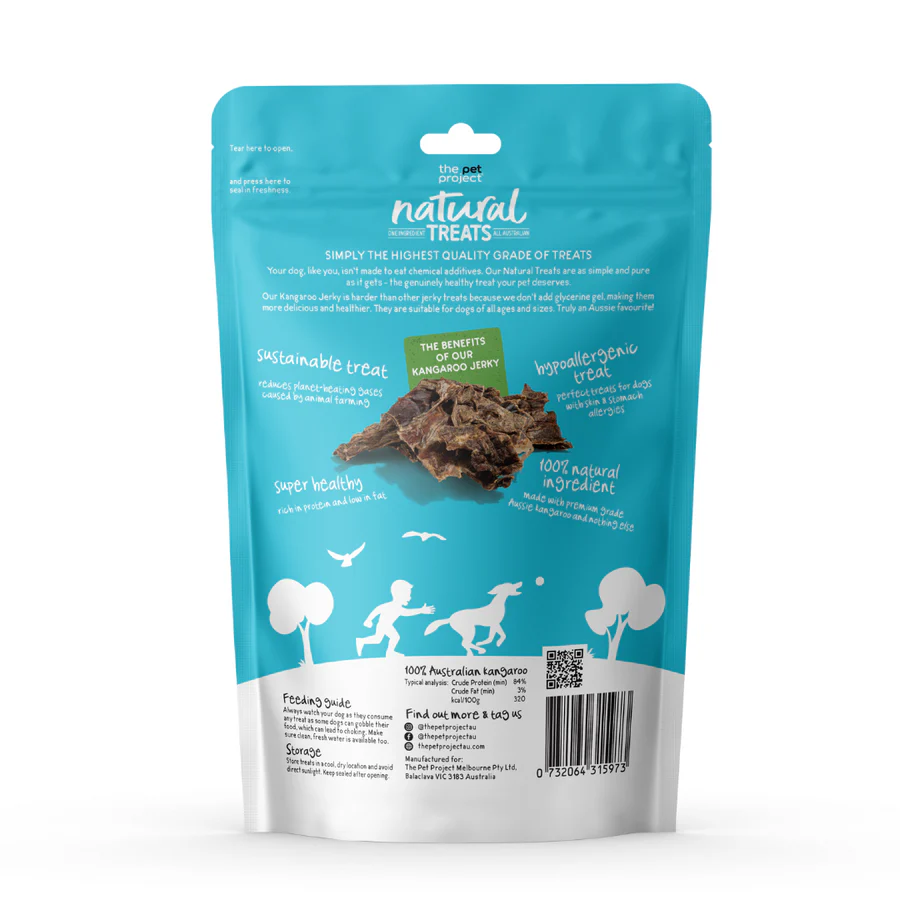
The Pet Project Kangaroo Jerky Dog Treats 100g are single-ingredient, air-dried treats made from 100% Australian kangaroo meat. The 100g resealable pouch contains firm, naturally variable jerky pieces for occasional treating or rewarding under supervision.
Quick facts
- Brand: The Pet Project
- Product: Kangaroo Jerky Natural Treats
- Pet: Dogs
- Pack size: 100g
- Ingredient: 100% Australian kangaroo meat
- Ingredient count: One
- Process: Air dried
- Texture statement: Firmer jerky dried without added glycerine gel
- Origin statement: Australian made and owned
- Protein: 84% minimum
- Fat: 3% minimum
- Energy: 320kcal per 100g
Ingredient and processing
The ingredient statement is 100% Australian kangaroo meat, with nothing else listed. This makes it a single-ingredient animal-protein treat. The front pack also describes it as 100% air-dried protein and grain free.
The manufacturer says this jerky is firmer than many other jerky treats because glycerine gel is not added. The current official page also states there are no fillers, additives, preservatives or artificial flavours. Natural pieces can vary in size, shape, thickness, colour and hardness.
Typical analysis and calories
- Crude protein: 84% minimum
- Crude fat: 3% minimum
- Energy: 320kcal per 100g
The pack labels these figures as a typical analysis. It does not publish moisture, fibre, ash, calcium, phosphorus, sodium or a full fatty-acid profile. A complete 100g pouch represents 320kcal using the stated energy value, while calories per piece are unknown because the pieces vary.
The 3% typical fat value does not by itself make the product suitable for every weight-management, pancreatitis or other medical diet. Count treat calories within the dog’s total daily intake and follow veterinary guidance when a diet is medically restricted.
Food-sensitivity and hypoallergenic claims
The pack calls the product hypoallergenic and suitable for dogs with sensitive stomachs, skin concerns or food sensitivities. A short ingredient list can make the food source easier to identify when kangaroo is compatible with the dog’s plan.
However, “hypoallergenic” does not mean allergy proof. Dogs can react to kangaroo, and the pack does not publish manufacturing cross-contact controls. Do not use it during an elimination trial, prescription diet or veterinary allergy plan unless the exact ingredient has been approved.
Texture, chewing and dental limits
This is a firm jerky rather than a soft training treat. The manufacturer’s broader product information associates chewing with teeth and gums, but the pack does not publish a plaque- or tartar-reduction study or veterinary dental certification.
The treat does not replace tooth brushing, oral checks or veterinary dental care. Firm dried pieces may cause choking, swallowing, gum injury or tooth damage. Select or break a piece to suit the dog’s mouth and chewing style, supervise continuously, and remove any fragment that becomes small enough to swallow whole.
Dogs that gulp food, have damaged teeth, have had dental work or struggle with firm textures may need a softer reward. Stop use if a piece splinters, causes bleeding or produces difficulty swallowing.
Australian sourcing and sustainability claims
The packaging states 100% Australian kangaroo and displays an Australian made and owned mark. The current official product page also says the treats are sourced and made locally and notes that kangaroo harvesting operates under a strict quota system.
The pack does not identify a harvest region, processor, quota number, chain-of-custody record, independent sustainability certification or product-specific emissions calculation. Therefore, the sustainability and reduced-environmental-impact wording remains manufacturer positioning rather than independently verified evidence on this page.
Who can eat it and how should it be stored?
The manufacturer describes the jerky as suitable for dogs of all ages and sizes. Individual suitability still depends on chewing ability, dental condition, health, diet and the size of each natural piece. Puppies, older dogs and small dogs may need appropriately sized pieces and closer supervision.
Feed as an occasional treat or reward as part of a balanced diet, not as a complete meal. The pack instructs owners to watch the dog while it eats because gulping can cause choking and to provide clean, fresh water.
Store in a cool, dry location away from direct sunlight and reseal the pouch after opening. Inspect pieces before feeding and discard any item that is mouldy, contaminated, unusually odorous or unsafe for the individual dog.
Frequently asked questions
Are The Pet Project Kangaroo Jerky Dog Treats single ingredient?
Yes. The pack lists 100% Australian kangaroo meat and nothing else. Single ingredient does not guarantee freedom from allergy or manufacturing cross-contact.
How much protein, fat and energy do they contain?
The typical analysis lists at least 84% crude protein, at least 3% crude fat and 320kcal per 100g.
Why is this kangaroo jerky firm?
The manufacturer says it is dried without added glycerine gel, producing a firmer texture than many soft jerky treats. Natural piece hardness still varies.
Is kangaroo jerky hypoallergenic?
The pack uses that term and markets the treat for sensitivities, but an individual dog can still react to kangaroo or cross-contact. Ask a veterinarian before feeding during an allergy investigation or prescription diet.
Does kangaroo jerky clean a dog’s teeth?
The texture encourages chewing, but no product-specific plaque-removal study or veterinary dental certification is published on the pack. It does not replace brushing or veterinary dental care.







There are no reviews yet.